Recurring Maintenance
Mowing, edging, trimming, bed touch-ups, and visit notes by weekly or biweekly cadence.

Services
Every service path starts by capturing property type, seasonality, photos, materials, access constraints, route zone, and review flags.
Use these lanes to route the first conversation and identify missing evidence.
Mowing, edging, trimming, bed touch-ups, and visit notes by weekly or biweekly cadence.
Spring and fall cleanup, leaf removal, pruning prep, debris hauling, and yard reset planning.
Dry patches, overspray, broken heads, timer issues, and suspected leaks flagged for qualified review.
Mulch, edging, soil notes, plant flats, and material estimates shaped before scheduling.
Ask for safe photos of access, beds, turf, irrigation, slopes, and material areas.
Chemical, safety, weather, property-boundary, drainage, and contract items stay reviewed.
Planning materials
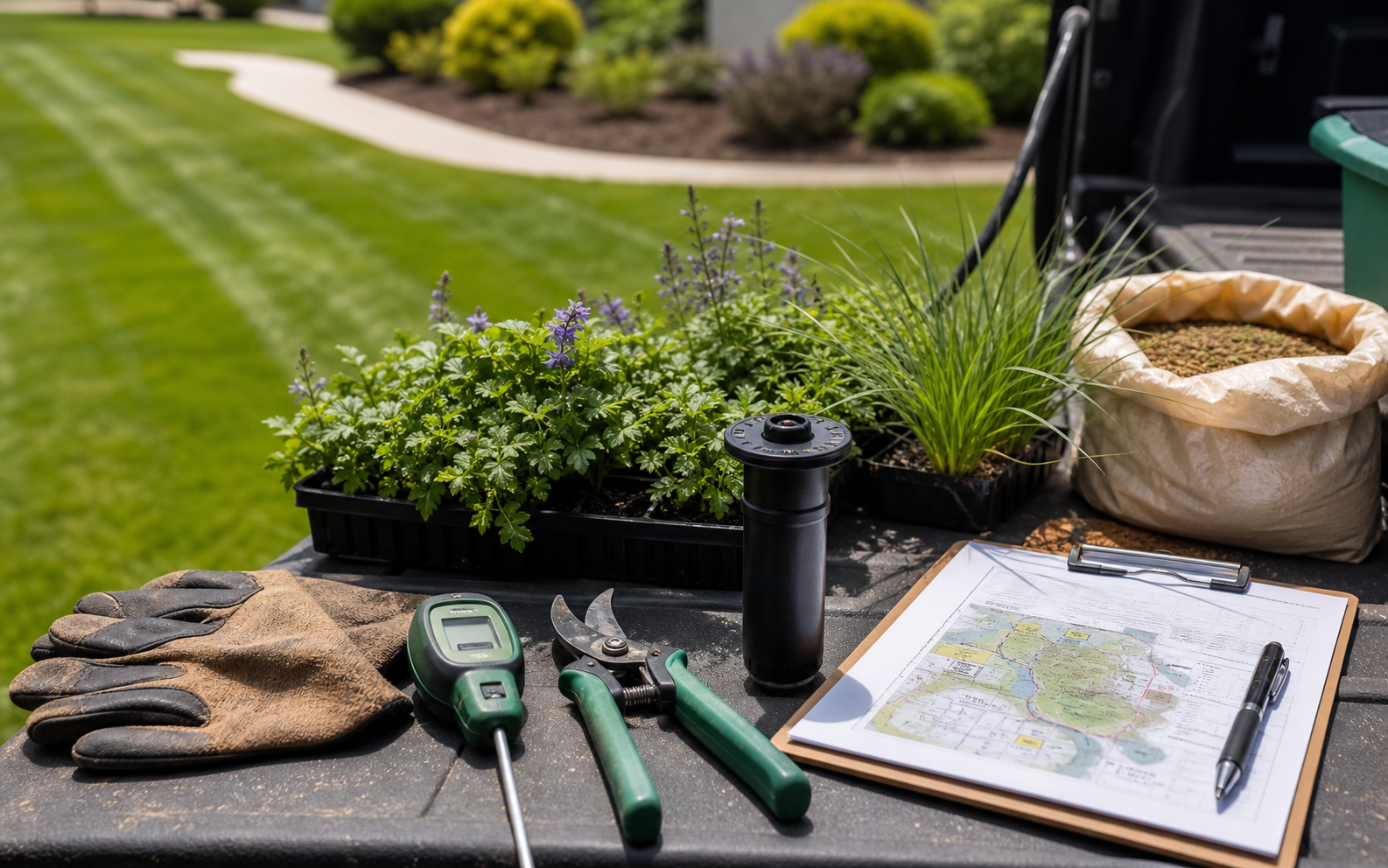
Lot size, photos, gate width, pets, parking, water access, material preferences, and weather dependencies all change the shape of the job.
How it works
Maintenance, cleanup, irrigation symptom, bed refresh, or enhancement.
Photos, access, measurements, pets, parking, material notes, and preferred cadence.
Human reviewers confirm risk items and route fit before dates or outcomes are promised.
Send the property details and photos so the request can be sorted quickly.